
Former Insurance Defense Attorneys Fighting for Rideshare Accident Victims
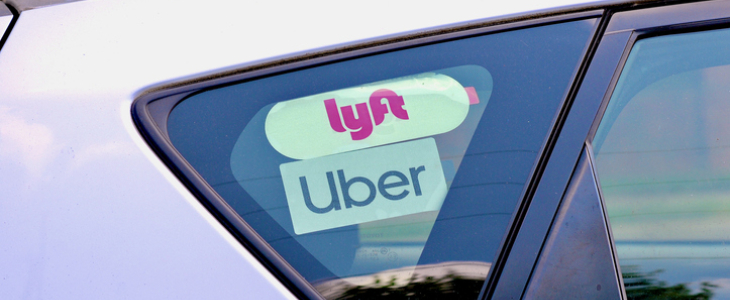
After a rideshare accident, you’re not just dealing with one insurance company — you’re facing a layered system designed to make it unclear who pays. Uber and Lyft both carry $1 million liability policies, but coverage depends entirely on what the driver was doing in the app at the moment of the crash, and every insurer involved will point the finger at someone else. At Hernandez Sunosky, LLP, we spent years on the insurance defense side of cases like these. We know the playbook because we helped write it. Now, our Kingwood Uber and Lyft accident lawyers use that insider knowledge to cut through the coverage disputes, dismantle the delay tactics, and fight for full compensation for rideshare accident victims across Kingwood and the greater Houston area.
Why Choose Hernandez Sunosky, LLP?
When you are dealing with the aftermath of a rideshare accident, you need a legal team that can go toe-to-toe with Uber, Lyft, and their corporate insurers. Hernandez Sunosky, LLP brings a unique set of advantages to your case:
- Both founding partners are former insurance defense lawyers who use insider knowledge of insurance company tactics to fight for injury victims
- Both attorneys are Board Certified in Personal Injury Trial Law by the Texas Board of Legal Specialization, a distinction held by less than 1,300 Texas lawyers
- Over 40 years of combined legal experience and membership in the American Board of Trial Advocates (ABOTA)
- Recognized as a Tier 1 Law Firm by Best Lawyers in the 2025 Best Law Firms edition, an AV Preeminent Rating with Martindale Hubbell, and Texas Super Lawyers
- Free consultations, free crash reports, and bilingual services (Se Habla Español)
- No fees unless we win your case. We don’t get paid unless you get paid.
Our Kingwood office is conveniently located at 855 Rockmead Drive, Suite 303, making us accessible to clients throughout Kingwood, Humble, Atascocita, and the surrounding communities.
How Does Insurance Work in an Uber or Lyft Accident?
One of the biggest challenges in a rideshare accident claim is determining which insurance policy applies. Your right to compensation depends on one critical factor: the driver’s app status at the time of the crash. Texas law sets specific insurance requirements based on whether the driver was waiting for a ride, en route to pick up a passenger, or actively transporting one.
Texas regulates rideshare companies under Chapter 2402 of the Texas Occupations Code, defining Uber and Lyft as Transportation Network Companies (TNCs). Insurance coverage is divided into three distinct periods under Chapter 1954 of the Texas Insurance Code:
App Off
When the driver is not logged into the Uber or Lyft app, their personal auto policy applies, usually the state minimum of $30,000 per person, $60,000 per accident, and $25,000 for property damage. Neither Uber nor Lyft provides any coverage during this period, which means your claim would be handled like a typical car accident against the driver’s personal insurer.
Between Prearranged Rides (Logged On, Available)
If the driver logs onto the company’s app and is only available for rides, Texas law requires that Uber or Lyft provide $50,000 worth of liability coverage per person and $100,000 worth of liability coverage per incident. This coverage also includes $25,000 for property damage.
An insurer may exclude from coverage under a personal automobile insurance policy any loss or injury that occurs while a transportation network company driver is logged on to the digital network. If the driver’s personal policy denies the claim, the rideshare company’s coverage steps in.
During Prearranged Rides (From Acceptance to Drop-Off)
Once the driver has accepted a ride and while the trip is ongoing, Texas law requires that Uber or Lyft carry $1,000,000 worth of liability insurance.
This insurance covers both the riders in the vehicle and other drivers on the road who may sustain injuries. Texas law requires Uber and Lyft to provide uninsured/underinsured motorist coverage as required by applicable statutes.
Who Can Be Held Liable for a Rideshare Accident?
Determining liability in a rideshare crash often involves multiple parties, and each case requires careful investigation. Depending on the circumstances, the following parties may bear responsibility for your injuries:
- The Uber or Lyft driver, if their negligence (distracted driving, speeding, impairment) caused the collision
- Another motorist who caused or contributed to the crash
- The rideshare company itself, if it failed to conduct proper background checks or enforce safety protocols
- A commercial vehicle operator or trucking company, if a large vehicle was involved
- A government entity, if dangerous road conditions or faulty traffic signals contributed to the accident
Passengers in rideshare accidents do not have control over the vehicle. Therefore, rideshare passengers are generally not liable for an accident unless the passenger’s actions directly led to the cause of the crash, such as grabbing the wheel or distracting the driver. However, this is rarely the case.
In most instances, a rideshare accident is caused by the rideshare driver or another driver. We investigate every angle to identify all liable parties and pursue every available source of compensation.
What Compensation Can You Recover After a Rideshare Accident?
The damages available in a rideshare accident case depend on the severity of your injuries, the insurance coverage in play, and the circumstances of the crash. In Texas, economic damages can include expenses like medical bills for surgery or physical therapy. Noneconomic damages can cover pain and suffering, disfigurement, and loss of consortium.
Recoverable damages in a Kingwood rideshare accident case may include:
- Medical expenses (emergency treatment, surgery, rehabilitation, and future care)
- Lost wages and diminished earning capacity
- Pain and suffering
- Property damage
- Mental anguish and emotional distress
- Loss of consortium for spouses and family members
In tragic cases where an Uber or Lyft accident results in the death of a passenger or driver, the victim’s family can file a wrongful death claim. A wrongful death claim recovers compensation for funeral expenses, loss of income, and emotional suffering. To be eligible for a wrongful death claim in Texas, you must be the deceased person’s surviving spouse, children, or parents. If you have lost a loved one in a rideshare collision, our wrongful death attorneys can help your family pursue justice.
What Should You Do After an Uber or Lyft Accident in Kingwood?
The steps you take immediately following a rideshare accident can significantly affect the outcome of your claim. Report the crash in the Uber or Lyft app and save screenshots of trip details and messages. Request a copy of the Texas CR-3 crash report once it is available. Avoid quick settlement discussions or recorded statements with insurers before you understand your injuries and rights.
We recommend the following steps to protect your rights:
- Call 911 and request emergency medical attention for anyone injured
- Document the scene with photographs, including all vehicles, road conditions, and visible injuries
- Collect contact and insurance information from every driver involved
- Report the accident through the rideshare app and take screenshots of your trip details
- Seek medical treatment promptly, even if your injuries seem minor
- Contact a rideshare accident attorney before speaking with any insurance adjuster
Most conversations with insurance providers and rideshare companies are recorded. What you say after an accident can significantly impact the outcome of your claim. Let us handle all communications with the insurers while you focus on your recovery.
How Does Texas Fault Law Affect Your Rideshare Claim?
Under Texas’s comparative negligence rule, commonly known as the “51% bar,” you can recover damages after an accident if you’re found to be 50% or less at fault. However, your compensation will be reduced in proportion to your share of fault. If you’re 51% or more responsible, you’re not entitled to any recovery. This rule is codified under the Texas Civil Practice and Remedies Code, Section 33.001.
Insurance companies handling rideshare claims often try to shift blame onto the injured party to reduce or eliminate payouts. As former insurance defense lawyers, we know these tactics firsthand and build strong cases to protect your right to full compensation. Even a small shift in fault allocation can mean the difference between a significant recovery and nothing at all.
How Long Do You Have to File a Rideshare Accident Claim in Texas?
Under Texas Civil Practice and Remedies Code § 16.003(a), in most personal injury cases in Texas, you have two years from the date of the injury to file a lawsuit. This two-year deadline applies to rideshare accident claims, and missing it can permanently bar you from pursuing compensation. If the injured person is under 18, the clock doesn’t start until they turn 18. If the injured party is mentally incapacitated at the time of the injury, the statute may be paused. If the at-fault party leaves Texas, the clock may pause until they return.
Acting quickly also helps preserve critical evidence. Rideshare app data, GPS records, and dashcam footage can disappear if preservation requests are not sent promptly. We send evidence preservation letters to Uber, Lyft, and their insurers early in the process to protect the information your case depends on.
What to Expect When You Work with Our Kingwood Rideshare Accident Lawyers
We understand that the period after a rideshare accident can be overwhelming, especially when you are dealing with injuries, medical bills, and uncertainty about your legal options. When you choose Hernandez Sunosky, LLP, you can expect a clear, structured process:
- A free initial consultation to evaluate your case and explain your legal options
- A thorough investigation, including obtaining app data, police reports, and medical records
- Identification of all liable parties and every available insurance policy
- Aggressive negotiation with Uber, Lyft, and their insurance carriers
- Full preparation for trial if a fair settlement cannot be reached
We treat every client like family, not a case number. Our team is available 24/7, and we handle all rideshare accident cases on a contingency fee basis, so you pay nothing unless we recover compensation for you.
Talk to a Kingwood Rideshare Accident Lawyer Today
If you or a loved one was injured in an Uber or Lyft accident in Kingwood, Humble, Atascocita, or anywhere in the Houston area, do not wait to get legal help. Contact Hernandez Sunosky, LLP for a free, no-obligation consultation. Se Habla Español. We don’t get paid unless you get paid.
How much does it cost to hire a rideshare accident lawyer?
At Hernandez Sunosky, LLP, there is no upfront cost. We handle all Uber and Lyft accident cases on a contingency fee basis, which means you owe us nothing unless we successfully recover compensation for you. Your initial consultation is also completely free.
Can I file a claim if I was hit by an Uber or Lyft driver while driving my own car?
Yes. If a rideshare driver caused a collision that injured you while you were in your own vehicle, you have the right to pursue a claim against the driver and potentially the rideshare company’s insurance, depending on the driver’s app status at the time of the crash. An experienced car accident attorney can review your case and identify all available coverage.
What if the rideshare driver was not at fault for my accident?
If another driver caused the crash while you were a passenger in an Uber or Lyft, your claim would typically be filed against the at-fault driver’s insurance. However, if that driver is uninsured or underinsured, you may still have access to the rideshare company’s uninsured/underinsured motorist coverage. We evaluate every potential source of recovery to make sure you are fully compensated.